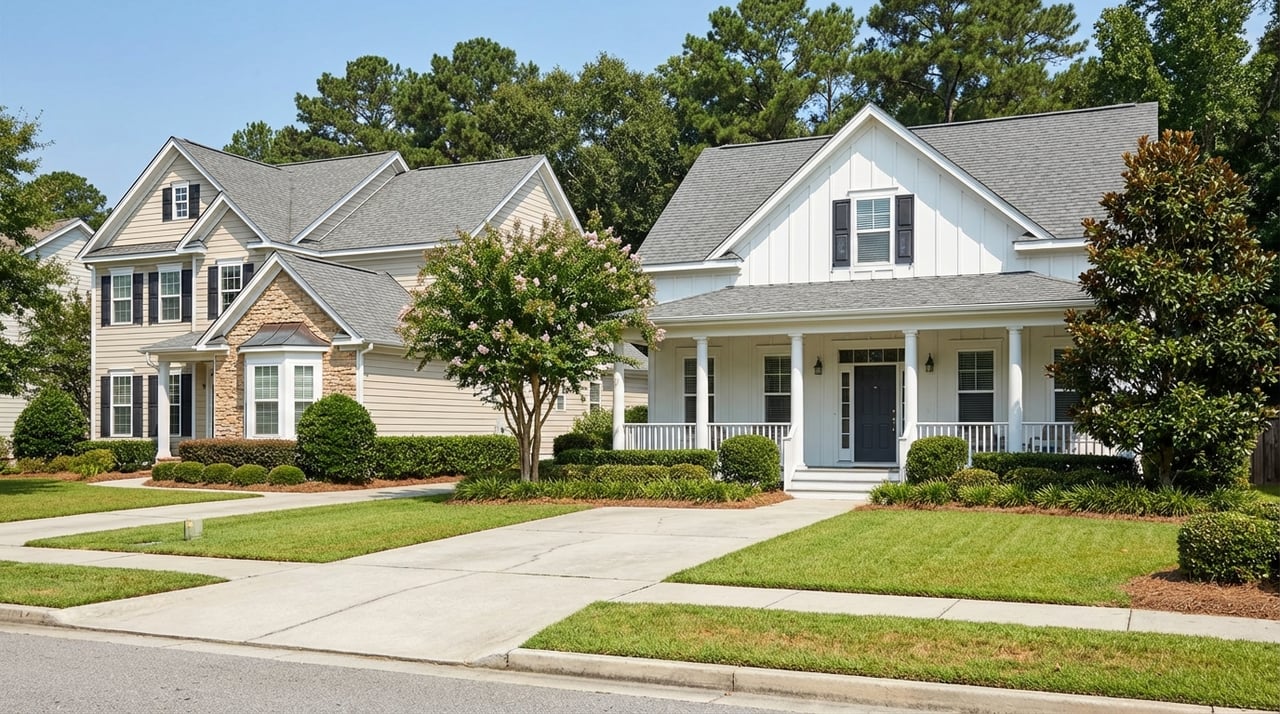
Torn between Fort Mill and South Charlotte? You’re not alone. Both offer strong neighborhoods, convenience to Charlotte job centers, and a comfortable suburban feel. The right choice depends on your taxes, commute, school priorities, and the type of home and lifestyle you want. In this guide, you’ll get a clear, side-by-side look so you can move forward with confidence. Let’s dive in.
Regional snapshot
Fort Mill is a fast-growing town just over the South Carolina line in York County. The U.S. Census estimates Fort Mill’s population at about 36,244 as of July 2024, reflecting steady growth since 2020. You get a true suburban feel with quick access to Charlotte via I-77 and I-485. See the Census snapshot for Fort Mill.
What we mean by South Charlotte
For this comparison, think of South Charlotte as the part of Mecklenburg County south of I-485. That includes popular corridors near Ballantyne, Steele Creek, and the edges of SouthPark. These areas connect quickly to I-485 and I-77 and put you closer to many corporate campuses and shopping hubs.
How close is Uptown Charlotte
Fort Mill sits roughly 19 miles from Uptown Charlotte. In light traffic, you can see 20 to 30 minutes, though rush hour and I-77 congestion can add time. Many South Charlotte neighborhoods are a similar distance, but access to different Uptown routes can shorten or lengthen your drive. Your exact route and destination matter more than city limits, so plan by address.
Taxes and cost of living
Your ongoing costs can shift depending on which side of the state line you choose. Here’s how to compare the big items: state income tax, sales tax, and property tax.
State income tax
- North Carolina uses a flat individual income tax rate. For tax year 2025, it is 4.25 percent. Review NC’s current rate schedule.
- South Carolina uses graduated rates. The top marginal rate for 2025 is 6 percent. Check the SC Department of Revenue for updates before you file.
What this means: If your wages are earned in North Carolina and you live in Fort Mill, North Carolina can tax that income as the work state. South Carolina residents can typically claim a credit for taxes paid to another state on the same income. See the SC credit form SC1040TC on the South Carolina DOR tax credits page and consult your tax professional.
Sales tax at the register
- South Carolina’s state sales tax is 6 percent. With local additions, Fort Mill buyers often see combined retail rates near 7 percent. You can confirm the current combined Fort Mill rate on Avalara’s city page.
- North Carolina’s base rate is 4.75 percent. Combined rates in Charlotte/Mecklenburg commonly land around 7.25 percent with local additions.
The gap is small for day-to-day purchases, but it can be noticeable on big-ticket items.
Property tax: how to compare apples to apples
Property tax math differs by state and by local district, so it helps to run a simple example for a specific address. Here is a sample method for a $500,000 owner-occupied home in each location.
- Fort Mill example: South Carolina owner-occupied homes use a 4 percent assessment ratio. On a $500,000 market value, the assessed value is $20,000. York County’s 2025 owner-occupied millage for the Fort Mill district is listed at 237.2 mills. Tax = (assessed value ÷ 1,000) × millage = (20,000 ÷ 1,000) × 237.2 = $4,744 annually. Always use the exact tax district row for the property on York County’s millage schedule.
- South Charlotte example: Mecklenburg County publishes the county portion of the rate at 49.27 cents per $100 of value. On a $500,000 home, county-only would be about $2,463.50. You then add the City of Charlotte or town levy, plus any special district fees, to get the total bill. Use the county rate plus the correct municipal rate from Mecklenburg’s tax rates page and confirm by street address.
Bottom line: Fort Mill’s owner-occupied structure and millage produce a different outcome than Mecklenburg’s county-plus-municipal model. For your budget, we can run side-by-side estimates for the exact neighborhood and price point you have in mind.
Cross-border payroll practicals
If you live in Fort Mill and work in Charlotte, North Carolina can tax your NC-source wages. South Carolina allows a credit for taxes paid to another state on the same income, which often helps avoid double taxation. Review the SC credit instructions and SC1040TC on the SC DOR tax credits page, and confirm your situation with a tax advisor.
Commute and transportation
Average commute times give helpful context, but your experience will vary based on route, departure time, and destination.
- The American Community Survey lists Fort Mill’s mean travel time to work at about 26.3 minutes. Charlotte’s citywide mean is about 24.7 minutes. Use these as a baseline only because peak-hour I-77 and I-485 traffic can add time. See the Census quick facts.
- If you work in Ballantyne Corporate Park or SouthPark, many South Charlotte neighborhoods put you closer to those job centers. If you work north in Uptown or the University area, check your on-ramps and backup routes across both options.
Transit access
Fort Mill is largely car-first with limited fixed-route transit. South Charlotte offers more Charlotte Area Transit System bus routes and connections to light rail in parts of the corridor. If transit is a priority, we can shortlist South Charlotte neighborhoods served by park-and-ride options and high-frequency routes.
Schools and education overview
Choose by exact attendance zone. School options and boundaries vary, and quality can differ school to school in large districts. Use official district tools for address-level verification.
Fort Mill School District
Fort Mill School District serves the Fort Mill area with one unified, well-regarded district. The district publishes strong indicators like AP participation and SAT-ACT averages, along with rapid enrollment growth. Review the FMSD fact sheet for current metrics.
Charlotte-Mecklenburg Schools in South Charlotte
Charlotte-Mecklenburg Schools is a large district with about 141,700 students across roughly 186 schools. It offers a wide range of magnets and specialized programs, and quality can vary school by school. For district scale and program context, see the CMS Fast Facts. If you value school choice and specialized pathways, South Charlotte may align well. If you prefer a smaller, unified district, Fort Mill may feel simpler.
Housing and lifestyle
Your best fit often comes down to home type, neighborhood age, and daily lifestyle.
Pricing picture
Recent reporting shows the broader Charlotte-area median sale price in the mid-300s, with South Charlotte neighborhoods often above the metro median. See the metro context in Axios Charlotte’s market update. Fort Mill’s pocket prices commonly land higher than the regional median due to newer construction and popular master-planned communities. Because pricing moves month to month, we will pull a fresh neighborhood MLS snapshot before you tour.
Home types and neighborhood feel
- Fort Mill: Expect many newer master-planned communities with single-family homes on small to medium lots, plus active-adult options and mixed-use villages. Neighborhood amenities like pools and trails are common.
- South Charlotte: You will find a mix of established single-family neighborhoods, newer subdivisions in Ballantyne and Steele Creek, and a stronger presence of townhomes and mid-rise condos near retail and employment centers.
Amenities and recreation
- Fort Mill highlights: The Anne Springs Close Greenway spans more than 2,100 acres with trails, lakes, and equestrian facilities. It is a major perk for outdoor lifestyles. Explore the Greenway’s activities. You also have Baxter Village and historic downtown clusters for dining and events, plus Carowinds nearby.
- South Charlotte highlights: SouthPark and Ballantyne put you close to shopping, dining, and many corporate campuses. You also have quicker access to major hospitals and Uptown’s cultural venues.
Side-by-side decision checklist
Use this quick scorecard to clarify priorities. Rate each item, then we will map your scores to neighborhoods and specific listings.
- Commute tolerance: Is a 20 to 35 minute car commute to your job center acceptable, and at what times are you on the road?
- State income tax sensitivity: Would North Carolina’s flat rate meaningfully change your monthly cash flow compared to South Carolina’s brackets?
- Property tax math: Do you prefer the predictability of Mecklenburg’s county-plus-municipal model or Fort Mill’s assessment ratio and millage structure? We can run examples for your price point and district.
- School preference: Smaller, unified district experience versus larger district with many magnet and program options.
- Housing type: Newer master-planned single-family emphasis versus more townhomes, condos, and established single-family streets.
- Lifestyle: Big green spaces and quieter suburban streets versus denser shopping, dining, and corporate campus proximity.
How to decide your next suburb
A clear path beats guesswork. Here is a simple plan we can complete in a single consult:
- Clarify your must-haves. Rank commute, school options, and home type.
- Run your tax picture. We will model state income tax, property tax by address, and typical sales tax impact for your budget using the NC rate schedule, York County’s millage, Mecklenburg tax rates, and SC credits.
- Map the commute. We will test real drive times for your work locations and backup routes.
- Verify schools by address. We will confirm current attendance zones and program options using district tools.
- Tour targeted neighborhoods. Compare a Fort Mill master-planned option next to a South Charlotte counterpart the same day.
When you are ready, schedule a quick consult with Felicia Murphy. You will get a practical, data-backed plan and a short list of homes that fit your timeline and budget.
FAQs
Is Fort Mill or South Charlotte cheaper after taxes?
- It depends on your income, home value, and address. NC’s flat rate is 4.25 percent, SC’s top rate is 6 percent, and property taxes use different calculations in each location, so we will model your exact scenario before you choose.
How long is the commute from Fort Mill to Uptown?
- In light traffic it can be about 20 to 30 minutes for roughly 19 miles, but rush-hour I-77 congestion can add time, so plan with your exact address and typical departure.
What if I live in Fort Mill and work in Charlotte?
- North Carolina can tax your NC-source wages, and South Carolina generally allows a credit for taxes paid to another state on the same income, which helps avoid double taxation.
How do schools compare between Fort Mill and South Charlotte?
- Fort Mill has a single district with strong published metrics, while Charlotte-Mecklenburg Schools is much larger with many magnet options and school-by-school variation; verify by address for any home you consider.
Where will I find more townhomes or condos?
- You will see more townhomes and condos in South Charlotte near SouthPark, Ballantyne, and job centers; Fort Mill leans toward newer single-family communities with planned amenities.
